
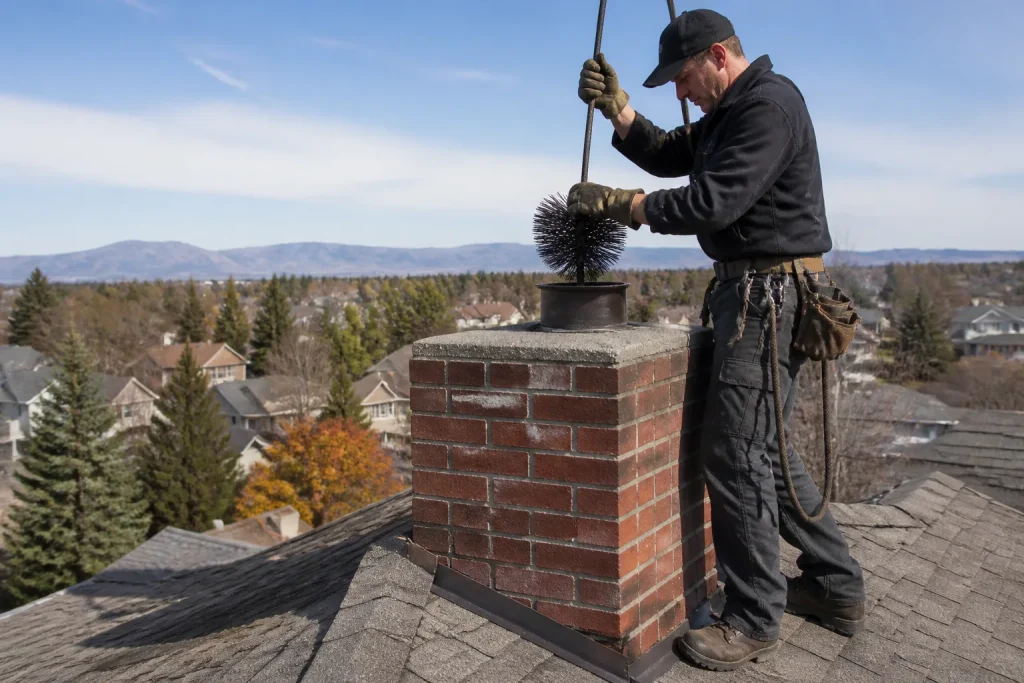
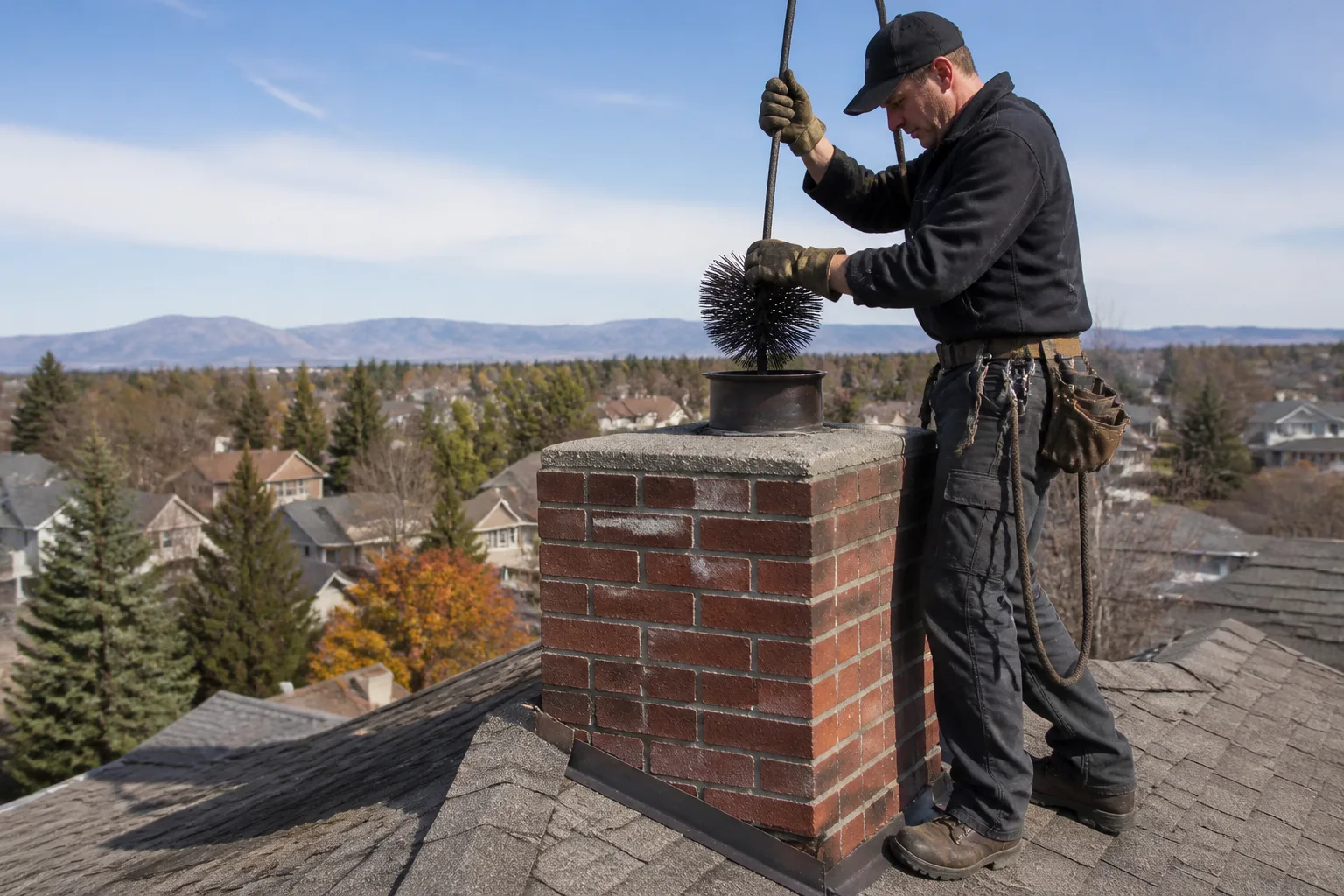
DuraFlex Chimney Sweep in Ontario: A Homeowner’s Guide
DuraFlex is a UL-listed flexible stainless steel chimney liner system made by M&G DuraVent, and it’s the right fix when your existing flue is cracked, offset, oversized, or otherwise no longer safely moving combustion gases. You don’t always need one. A good sweep and Level 2 camera inspection costs $250 – $450 in Ontario and tells you whether a liner is even necessary. If you’d rather skip the guesswork, call (833) 467-7685 and we’ll tell you what we found, show you the evidence, and give you options.
Here’s the thing most homeowners never hear: a stainless steel flexible liner runs $1,500 – $3,000 installed, and in our experience it’s genuinely the right investment in roughly 60% of the cases it gets quoted. The other 40% needed a sweep, a minor masonry repair, or a different liner approach entirely. This guide explains the difference, because you shouldn’t spend three grand on a liner when a $300 sweep would have done the job.
What DuraFlex Actually Is, and Why the Brand Name Matters
DuraFlex is a specific product line: a corrugated, single-wall or double-wall flexible stainless steel liner that gets pulled through an existing chimney flue and connected at both ends. It is not a generic term for chimney relining. When a contractor says “we’ll put a liner in,” you need to know which liner, what alloy, what thickness, and who made it. The answers determine whether the liner lasts 15 years or 35.
The professional-grade distinction matters here in Ontario. We specify DuraFlex because it’s sourced through Copperfield and Olympia Chimney, the two largest professional chimney supply distributors in the trade. You won’t find it on a big-box shelf next to dryer hoses. That supply chain controls quality: UL listing, alloy traceability, and warranty support that a no-name liner cannot match. We also install HeatShield ceramic resurfacing when the flue damage is shallow and a full liner isn’t warranted. Different problem, different tool. But when the call is a flexible liner, DuraFlex is what we pull off the truck.
The Four Conditions Where DuraFlex Is the Right Call
Flexible liners solve specific problems. If none of these describe your chimney, you likely don’t need one.
- Offset flues. Older Ontario masonry chimneys were sometimes built with a bend or offset between the firebox and the top of the flue. A rigid liner can’t make that turn. A flexible liner can. This is the single most common reason we install DuraFlex.
- Oversized masonry chases. If the original clay tile flue is 12″x12″ but your fireplace or insert only needs a 6″ or 8″ round flue, the oversized cavity cools combustion gases too quickly, which builds creosote faster and weakens draft. A correctly sized flexible liner fixes both problems at once.
- Appliance conversions. When you convert a wood fireplace to gas or install a high-efficiency insert, the new appliance’s exhaust temperature and volume are different from what the old flue was built for. A liner sized and rated for that appliance is code-driven and non-negotiable in most Ontario and Southern California jurisdictions.
- Deteriorated terra cotta tile. Clay tile liners crack. Heat cycling, moisture, and age all take their toll. Once tiles are cracked or missing, the flue no longer contains combustion gases or protects the surrounding masonry. You either reline or stop using the fireplace.
Those four conditions account for nearly every DuraFlex install we do. If your chimney is straight, the tiles are intact, and the draft is fine, you don’t need a liner. You need a sweep. And we’ll tell you that plainly.
Why Flexible Liners Make Sense in Southern California Specifically
Ontario sits in earthquake country. You feel the small ones; the big ones are always a possibility. Rigid masonry liners and cast-in-place systems crack when the ground shifts. We’ve seen terra cotta flues split open after a 4.0 tremor that barely knocked a picture off the wall. Houses settle here too. A flexible stainless liner absorbs that movement without failing, which is why it’s the practical choice for this region’s seismic reality.
Heat is the other factor. Ontario summers push 100°F and winter nights drop into the 30s. That temperature swing expands and contracts masonry at a different rate than clay tile, which accelerates cracking along mortar joints. A flexible liner isn’t immune to thermal stress, but it moves with the chimney instead of fighting it. The corrugated profile is designed to flex under thermal expansion without tearing. That’s a material property you get from a correctly manufactured liner, not a hardware-store tube.
Southern California humidity swings matter less for stainless steel than for masonry, and stainless doesn’t absorb moisture the way clay tile does. Less absorbed moisture means fewer freeze-thaw cracks and less spalling brickwork around the flue. We work on Ontario chimneys that have been through fifty years of this climate, and the difference between a maintained flue and a neglected one is stark.
What the Installation Process Actually Looks Like
This is where a lot of homeowner guides gloss over the details. Here are the real steps, in the order they actually happen.
- 1
Sweep first. The existing flue gets swept before anything else. A liner goes inside your chimney, and you don’t want creosote, soot, or old bird nesting trapped behind it. This isn’t optional and it isn’t a way to pad the bill. It’s preparation.
- 2
Camera inspection. We run a camera through the flue to document the condition of the tile, identify offsets, and confirm measurements. This tells us whether DuraFlex is correct and what diameter the liner needs to be.
- 3
Sizing calculation. Liner diameter is determined by the appliance, not guesswork. A wood fireplace that drafts well on a 6-inch flue will not draft the same on an 8-inch liner. Getting this wrong means smoke in the living room.
- 4
Liner assembly and drop. The flexible liner is fed from the top of the chimney down to the connection point. Connectors are installed at the appliance and the termination cap.
- 5
Insulation as needed. Some installs require a wrapped insulation blanket around the liner. We specify this based on the appliance type and clearance to combustibles.
- 6
Connection and test. The liner gets connected to the appliance, the top plate and cap go on, and we test the draft before we leave.
An Ontario install typically runs one full day. Multi-story homes add time. If someone quotes you a liner install with no mention of sweeping or inspection first, that tells you something about how they work.
Questions to Ask Before You Sign Anything
When you get a quote for a liner, in Ontario or anywhere else, ask these five questions. The answers tell you whether the contractor is a chimney professional or a guy with a truck and a receipt.
- What alloy grade is the steel? The answer should be an actual grade like 316L or 316Ti. 316L is the standard for wood-burning applications. If they can’t tell you, walk.
- What gauge wall thickness? Flexible liners come in single-wall and double-wall. Single-wall is less expensive and adequate for many existing masonry flues. Double-wall is required in some zero-clearance or clearance-sensitive situations. Get the number.
- How was the liner diameter calculated? The answer should reference the appliance manufacturer’s spec or a calculated volume-to-height ratio. Not “we use 8-inch for everything.”
- What’s the warranty, and who does the warranty work? DuraFlex warranties vary by application. Get the coverage in writing, and confirm whether the installing contractor handles claims.
- Is the existing flue being swept before install? If they say it doesn’t need to be, you’ve got a problem.
These aren’t hostile questions. A competent installer expects them. We welcome them. If you’re getting a liner quote in Ontario, call (833) 467-7685 for a second opinion even if you don’t hire us. Better to spend ten minutes on the phone than three thousand dollars on the wrong liner.
When a DuraFlex Liner Is Not What You Need
We’ve already touched on this, but it deserves its own section because it’s where our industry loses the most credibility. A liner is not a maintenance item. If your fireplace drafts fine and a camera inspection shows intact tile, you need a chimney sweep, not a liner. If the flue has minor surface damage at the top few feet, a HeatShield ceramic resurfacing job often restores it for a fraction of a liner’s cost. If the problem is a cracked crown or bad flashing, the fix is masonry work, not a liner.
We pulled one out of a garage over in the Cimarron neighborhood last week where a previous contractor had sold the homeowner a full reline to fix a drafting problem. We found a dead chimney swift and a nest, not a flue failure. The sweep cost them $300. The liner quote had been $2,800. That homeowner learned what this article is trying to teach you: the camera doesn’t lie, but contractors do.
A related service worth mentioning here: if the appliance vents into the chimney is your dryer, that’s a different problem entirely. Dryer vents are a leading cause of house fires, and cleaning them is maintenance, not optional. We handle dryer vent cleaning separately from chimney work because they’re different systems with different failure modes. If you’re in Ontario and haven’t had either done in the last two years, now is the time to get both on the calendar.
How to Choose Between Sweeping, Resurfacing, and Relining
The decision tree is simpler than it sounds.
- Fireplace drafts fine, no visible damage inside, minor creosote buildup: sweep only, $250 – $450.
- Draft is weak, camera shows shallow flue damage or spalling near the top: HeatShield resurfacing may be sufficient, $800 – $1,500 depending on the flue length.
- Camera shows cracked tiles throughout, or the flue is offset, or you’re converting appliances: DuraFlex liner, $1,500 – $3,000 depending on height, diameter, and insulation.
Those numbers aren’t quotes. They’re the ranges we see across Ontario. Your actual price depends on chimney height, access, and appliance type. Estimates are free. Call (833) 467-7685 and we’ll give you a real number based on what the camera shows.
The Bottom Line
DuraFlex is a professional-grade flexible stainless steel liner system, and it’s the correct fix when your Ontario chimney has an offset flue, an oversized chase, an appliance conversion, or deteriorated clay tile. It’s not a routine maintenance upgrade, and you shouldn’t pay for it unless the camera proves the need. When the need is real, the material and the installer both matter. Get a sweep and inspection first. Ask about alloy, gauge, diameter, and warranty. And if the answers don’t add up, get a second opinion.
If you’re in Ontario and need a sweep, a liner evaluation, or an honest second quote, Ontario Chimney offers free estimates. Call (833) 467-7685. We install and service Chimney Repair in Ontario with materials we’d put in our own homes.
Related services in Ontario: annual chimney sweeping and dryer vent cleaning. Both are maintenance, both prevent fires, and both should be done before burning season starts.
Frequently Asked Questions
A DuraFlex stainless liner install in Ontario typically runs $1,500 – $3,000 depending on chimney height, liner diameter, and whether insulation is required. The sweep and camera inspection before the install costs $250 – $450. Call (833) 467-7685 for a free estimate on your specific chimney.
DuraFlex is a specific brand: a UL-listed flexible stainless steel liner system made by M&G DuraVent. It’s not a generic term for chimney relining. The brand distinction matters because alloy grade, wall thickness, and warranty support vary significantly between manufacturers. We specify DuraFlex because it’s sourced through Copperfield and Olympia Chimney, the two largest professional chimney supply distributors in the trade.
The only way to know is a camera inspection. If your fireplace drafts fine and the flue tiles are intact, you need a sweep. If the camera shows cracked tiles, an offset, or an oversized flue, a liner may be warranted. We’ll show you the footage and explain what you’re looking at before recommending anything.
Sometimes. Insulation is specified based on the appliance type and the clearance between the liner and the surrounding masonry. A wood-burning fireplace in an interior chimney often doesn’t require it. A high-efficiency appliance or a zero-clearance situation often does. This is determined at the time of install, not guessed at over the phone.
A correctly installed 316L stainless liner in a residential Ontario chimney should last 15 – 25 years, and often longer when the chimney is properly maintained. Annual sweeping and regular inspections extend that life. The failure points are usually at the connections, which is why installation quality matters as much as the material itself.
Written by the team at Ontario Chimney, serving Ontario since 2014. We install and service DuraFlex liner systems, HeatShield ceramic resurfacing, and perform camera-verified chimney inspections across the Ontario area. Learn more about our services from the Ontario Chimney home page.
Need Chimney Cleaning Help?
Call Ontario Chimney - licensed & insured, here with fast after-hours help in Ontario.
(833) 467-7685