Emergency Chimney Sweep Near Me: What Ontario Homeowners Should Do First
If you suspect a chimney fire, close the damper if you can reach it safely, get everyone out of the house, and call 911 before you call anyone else. Once the fire department clears the scene, the next call is to a chimney professional who can do a Level 2 camera inspection before the fireplace gets used again. If you’re dealing with smoke backing into the house or a sudden blockage instead of flames, shut the appliance down and call us at (833) 467-7685 for a free estimate.
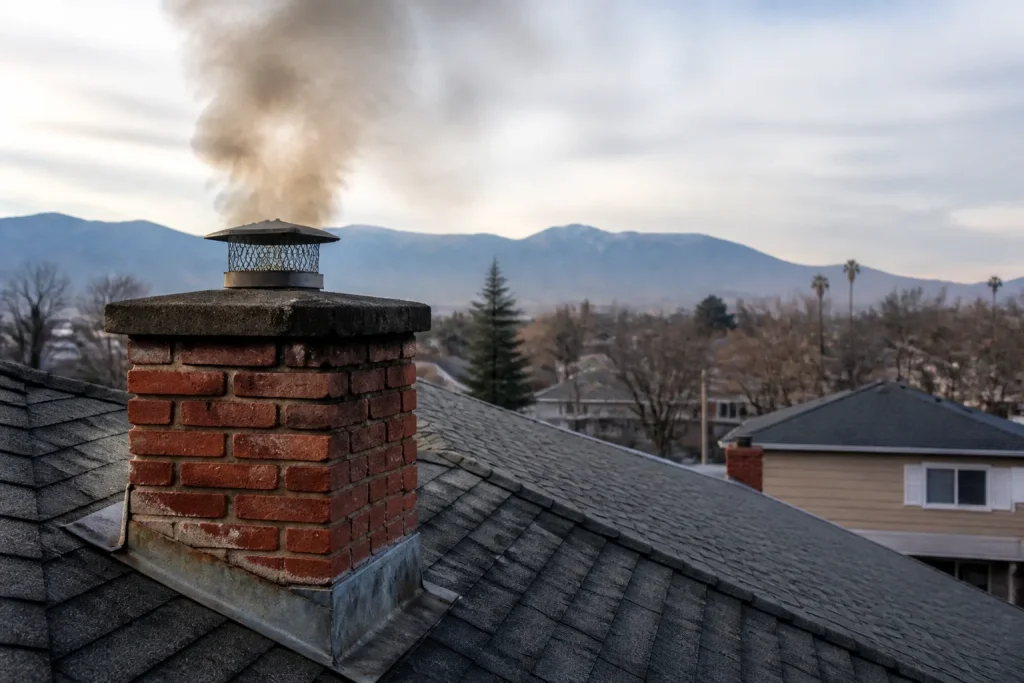
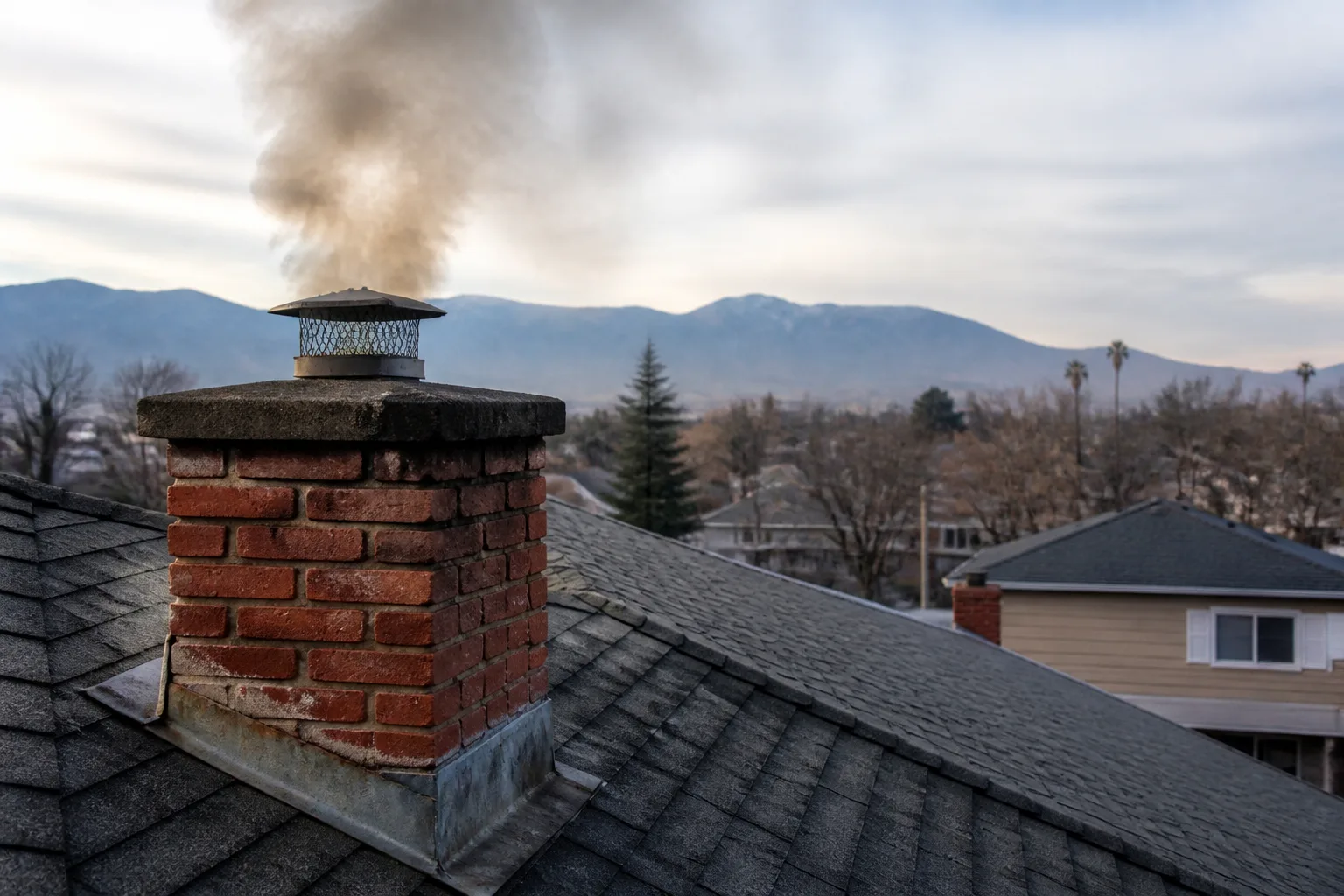
A chimney fire burns at over 2,000°F and can travel into wall framing within minutes. The problem is that most Ontario homeowners don’t recognize one when it’s happening. They’re watching the top of the chimney for flames when the real danger is the roaring, cracking sound coming from inside the flue. By the time you see fire, the structure around it may already be compromised.
The Three Types of Chimney Emergencies (And Why the Response Isn’t the Same)
Most homeowners search for an emergency chimney sweep without knowing what they’re actually dealing with. That matters because the right first move depends entirely on which emergency you have. We’ve responded to all three across Ontario, and the homeowner instincts that work for one can make another worse.
- Active chimney fire. This is the loud one. You’ll hear crackling or a rumble like a freight train, and you may see thick smoke pouring from the top. The fire is inside the flue, burning creosote deposits that can exceed 2,000°F. This is a fire department call, not a sweep call.
- Carbon monoxide or draft failure. Smoke spills into the room when you light a fire, or your CO detector goes off near the fireplace. Something is blocking the flue or the chimney can’t draw properly. This is urgent but not a 911 situation unless your detector is active. Shut the appliance down, open windows, and get a sweep out to diagnose it.
- Sudden total blockage. A flue that was working fine yesterday suddenly won’t draw at all. In Ontario, this often means an animal nest, a collapsed tile liner, or a chimney cap that shifted. You won’t see flames, but running the fireplace this way pushes carbon monoxide into the house.
Each of these needs a different sequence of action. The problem is that a generic internet search lumps them all under “emergency chimney sweep near me,” and homeowners end up calling the wrong person first. A true chimney emergency requires knowing what kind of problem is happening before you pick up the phone.
If You Suspect a Chimney Fire: The Order of Operations Matters
Calling a chimney sweep first when you have an active chimney fire is the wrong sequence, and we see it happen. The fire department has the equipment to contain a fire that’s already breached the flue or spread into the attic. A sweep has brushes and a vacuum. We can’t fight a structure fire.
Here’s the correct order:
- Close the damper if you can reach it without burning yourself. This cuts oxygen to the fire. If the damper handle is hot or flames are visible through the glass, skip this step.
- Get everyone out of the house. Don’t stop to grab anything.
- Call 911 from outside. Tell dispatch you have a chimney fire. They’ll respond as a structure fire because they have to assume it’s already spread.
- After the fire department clears the scene, call a chimney company. This is when the sweep comes in. The chimney needs a full assessment before anyone uses it again.
Between the incident and the technician’s arrival, document everything. Take photos of the chimney top, the firebox, any smoke staining on walls or ceilings, and the area around the appliance. Shut off the gas supply if it’s a gas fireplace. Don’t touch the firebox or attempt to clean anything yourself. The evidence inside the flue is what tells us how far the fire traveled and what needs repair.
What “Emergency Chimney Sweep” Actually Means as a Service
Here’s something most homeowners don’t realize until they’re in the situation: “emergency chimney sweep” is not a regulated term. Any company can put it on their website. What happens when you call is what reveals whether you’re getting a true emergency response or a marketing label for a standard next-day booking.
In Ontario, the distinction matters because chimney emergencies don’t happen on a schedule. A chimney fire happens at 9 p.m. on a cold night. A blockage gets discovered on the first fire of the season. The companies that genuinely handle emergencies have technicians who can respond the same day, assess the situation, and at minimum make the appliance safe so you’re not sitting in a cold house wondering if you can use your fireplace.
Companies that use the term loosely will book you for a standard appointment two or three days out. That’s not an emergency service. That’s a regular sweep with a scary label.
When you’re calling around, ask the question directly: “If I have an active chimney emergency, can someone come out today to assess it?” The answer tells you everything. At Ontario Chimney, we’ll tell you what we found, show you the evidence, and give you options. That includes being honest about when something can wait. Not every blocked flue is a five-alarm fire, but every blocked flue deserves a straight answer about what’s actually going on.
One more thing worth knowing: repair companies and cleaning companies often split the work. A sweep comes out, identifies a problem, and then you’re left coordinating with a separate contractor. For chimney work, that coordination gap is where things slip. It’s worth looking for a company that handles the full scope, from sweep to structural repair, because an emergency response is only as good as the follow-through. Ontario Chimney home covers the full range, which means one company from inspection to repair.
What to Do Between the Incident and the Technician’s Arrival
This window is where homeowners either preserve the evidence or accidentally destroy it. We’ve arrived at homes in Ontario where a well-meaning homeowner vacuumed out the firebox before we got there, taking half the diagnostic information with it. The instinct to clean up is understandable, but it actively works against getting an accurate assessment.
Here’s what to do, and what not to do:
Do:
- Take photos of everything: the firebox, the flue opening, the chimney cap from outside, any smoke damage on walls or ceilings.
- Shut off the appliance. For a gas fireplace, turn off the gas valve. For a wood-burning fireplace, just don’t light another fire.
- Open windows if there’s smoke smell in the house, but don’t run fans that could disturb soot deposits before they’re documented.
- Write down what you observed: the time, the sound, the smell, whether your CO detector went off. This timeline matters for insurance claims.
Don’t:
- Don’t clean the firebox or sweep out ash.
- Don’t try to inspect inside the flue yourself. If the liner is compromised, you could dislodge damaged material and make the problem worse, or worse, injure yourself.
- Don’t light another fire “just to see if it works.” It might not, and the consequences of finding out that way can be serious.
- Don’t touch the exterior chimney masonry if there’s visible cracking. A damaged chimney top can drop debris down the flue.
If your CO detector went off, leave it activated. Don’t reset it until a technician confirms the flue is clear and drafting properly. This is one area where the homeowner’s own documentation matters as much as ours. We rely on what you saw and heard to build the full picture.
Why a Post-Incident Level 2 Inspection Is Non-Negotiable
After any chimney emergency, the temptation is to get a quick sweep and call it done. That’s a mistake. A standard Level 1 inspection, which is what you get with routine maintenance, doesn’t look inside the flue with a camera. After a chimney fire or a major blockage, you need a Level 2 inspection that goes deeper.
The reason is straightforward: a chimney fire can crack the flue liner, and a cracked liner lets heat and combustion gases reach the framing around the chimney. You can’t see that from the top or from the firebox. The camera tells you if the structure is still sound or if the chimney needs repair before it’s safe to use again.
This is also what your insurance carrier needs to see. If you’re filing a claim after a chimney fire, the adjuster will want documentation that a qualified professional inspected the chimney and identified the damage. A camera inspection report gives them what they need to process the claim. Every chimney fire we’ve dealt with in Ontario has involved this same conversation, and homeowners who skip the Level 2 inspection end up fighting with their insurance company later. Chimney repair in Ontario requires knowing what’s actually damaged before any repair work starts, which is exactly what that camera inspection provides.
The brands we use matter here because the inspection is only as good as the components that end up in your chimney. When repair work is needed, we install and service chimney sweep in Ontario work with professional-grade materials: DuraFlex for flexible liner systems that navigate offset flues, and components sourced from Copperfield and Olympia Chimney, the two largest professional chimney supply distributors in the trade. These aren’t the parts you pull off a shelf at a big-box store. They’re what certified chimney professionals actually specify.
When to Call a Pro (And When You Can Wait)
Not every chimney issue is an emergency. If you’ve got a little smoke spillage that only happens on windy days, or you’ve noticed some creosote buildup during routine use, that’s a standard sweep appointment, not a middle-of-the-night call. Book it, get it cleaned, and move on.
But here’s the short list of signs that you should treat as urgent:
- Active flames or roaring sounds from inside the chimney. This is a fire. Call 911 first.
- CO detector activation near the fireplace. Leave the house if levels are high, and call for professional assessment.
- Smoke pouring into the room during a fire. Something is blocking your draft. Shut it down and call us.
- A sudden change in how your fireplace draws. If it worked fine last week and won’t draw now, something changed in the flue.
We pulled a tennis ball and a full squirrel nest out of a flue at a house near the Ontario Convention Center last winter. The homeowner had lit his first fire of the season and the smoke came back into the living room within minutes. He thought he needed a new chimney. He needed the blockage removed and a proper cap installed. That’s the difference between a real assessment and a guess.
If you’re in Ontario and dealing with a chimney that’s suddenly misbehaving, the safest move is to call. We’ll talk through what you’re seeing, tell you whether it’s urgent, and get someone out if it is. Related services in Ontario: dryer vent cleaning is also part of our core work, and it’s the most overlooked fire risk in most homes.
The Bottom Line
Chimney emergencies fall into three categories, and each one has a different playbook. Active chimney fire means 911 first, then a sweep for the post-incident inspection. Carbon monoxide or draft failure means shutting the appliance down and getting a professional assessment right away. Sudden blockage means the same. In every case, the first 20 minutes of homeowner action sets the tone for how contained the situation stays.
The second piece is knowing who you’re actually calling when you search for an emergency sweep. Ask if they can come out same-day for a true emergency. Ask if they do camera inspections. Ask if they handle repair work themselves or hand you off to someone else. The answers determine whether you’re getting actual emergency response or a marketing label.
If you’re in Ontario and need help, Ontario Chimney offers free estimates. Call (833) 467-7685, and we’ll tell you what we found, show you the evidence, and give you options.
Frequently Asked Questions
For a genuine emergency, such as an active chimney fire that the fire department has cleared or a sudden blockage, we work to get a technician out the same day. Call (833) 467-7685 and tell us what’s happening, and we’ll give you a straight answer about timing rather than booking you three days out.
A Level 1 inspection is visual and happens during routine maintenance. A Level 2 inspection includes camera work inside the flue and is required after a chimney fire, a major weather event, or a change to the system. If you’ve had an emergency, a Level 2 is what your insurance company will want to see.
Emergency service often costs more than a routine sweep because of scheduling demands, but the exact price depends on what’s actually wrong. A simple blockage removal is different from post-fire repair work. Call (833) 467-7685 for a free estimate, and we’ll tell you what you’re looking at before any work starts.
Sometimes, but not always. If the chimney is structurally sound and the blockage was the only issue, you may be fine. If the camera inspection reveals cracks, a damaged liner, or other problems, using the fireplace before repairs are done could push carbon monoxide into your home. We’ll tell you plainly whether it’s safe to light a fire or not.
Written by the team at Ontario Chimney, serving Ontario since 2014.
Need Chimney Cleaning Help?
Call Ontario Chimney — licensed & insured, here with fast after-hours help in Ontario.
(833) 467-7685